Indication and
Limitations of Use:
Parsabiv® (etelcalcetide) is indicated for the treatment of secondary hyperparathyroidism (HPT) in adult
patients with chronic kidney disease (CKD) on hemodialysis. Read More

Indication and
Limitations of Use:

Parsabiv® (etelcalcetide) is indicated for the treatment of secondary hyperparathyroidism (HPT) in adult
patients with chronic kidney disease (CKD) on hemodialysis.

Parsabiv® has not been studied in adult patients with parathyroid carcinoma, primary
hyperparathyroidism, or with CKD who are not on hemodialysis and is not recommended for use in these
populations. Read Less

Parsabiv® is available in 3 different, single-use, single-dose vials1

dose-vial
dose-vial-mob

Not an actual Parsabiv® vial. The displayed vials are for illustrative purposes only.

Things to know before you initiate Parsabiv®

Switching to Parsabiv® (etelcalcetide) from oral cinacalcet

Ensure your patient discontinues use of oral cinacalcet for at least 7 days prior to starting Parsabiv®1

Discontinue oral cinacalcet for at least 7 days graphic

Initiate Parsabiv® after day 7 if corrected serum calcium is at or above the lower limit of normal*

*Lower limit of reference range in phase 3 trials was 8.3 mg/dL.1,2

Parsabiv® dosing at initiation

The approved starting dose is 5 mg, TIW1

The starting dose of Parsabiv® is 5 mg, 3 times a week

Parsabiv® administration

  • DO NOT administer Parsabiv® (etelcalcetide) more frequently than TIW1
  • Ensure corrected serum calcium is at or above the lower limit of normal prior to Parsabiv® initiation, a dose increase, or reinitiation after dosing interruption1
  • If a regularly scheduled hemodialysis treatment is missed, DO NOT dminister any missed doses. Resume Parsabiv® at the end of the next hemodialysis treatment at the prescribed dose1
  • If doses of Parsabiv® are missed for more than 2 weeks, reinitiate Parsabiv® at the recommended starting dose of 5 mg (or 2.5 mg if that was the patient’s last dose)1

TIW = three times a week.

When switching to Parsabiv® (etelcalcetide), consider prior oral cinacalcet dose when evaluating early results

In a post-hoc analysis, phase 3 trials showed that when initiating Parsabiv® 5 mg three times weekly after a minimum 7-day washout of oral cinacalcet, results correlated with previous oral cinacalcet dose strength3

iPTH change from baseline by prior oral cinacalcet dose3

Graph of iPTH change from baseline by prior oral cinacalcet dose

Total placebo-controlled studies: Studies 20120229 and 20120230. Based on exclusion criteria, patients were required to be off oral cinacalcet at least 4 weeks before entering trial. Only oral cinacalcet records with stop date prior to and within 1 year of treatment start date are considered. The last oral cinacalcet dose prior to the treatment start date is used in the analysis.

Analysis is exploratory and has not been adjusted for multiple comparisons. No conclusions of statistical or clinical significance can be drawn.

Parsabiv® (etelcalcetide) was titrated no more frequently than every 4 weeks to a maximum dose of 15 mg TIW to achieve target PTH.2,4,5

  • The starting dose of Parsabiv® was 5 mg at the end of hemodialysis TIW2,4,5
  • The dose was titrated by 2.5 mg or 5 mg at weeks 5, 9, 13, and 17 to achieve predialysis serum iPTH ≤ 300 pg/mL2,4,5
  • The average dose of Parsabiv® at the time of the EAP (defined as weeks 20 through 27, inclusive) was 7.2 mg TIW1

EAP = efficacy assessment phase.

How to monitor and titrate Parsabiv®

Check their labs and know where they stand1

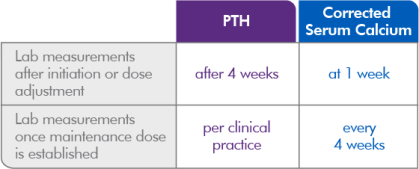
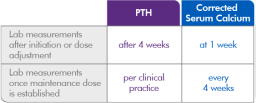
Monitoring for PTH and corrected serum calcium graphic

Adjust the dose of Parsabiv® (etelcalcetide) based on PTH and corrected serum calcium1

Titrate Parsabiv® up or down graphic

Start at 5 mg—then titrate up or down

Reductions too great? Titrate down:

  • Decrease or temporarily discontinue Parsabiv® (etelcalcetide) when PTH is below target range
  • Consider decreasing or temporarily discontinuing Parsabiv®, or use concomitant therapies,* when corrected serum calcium is below lower limit of normal but ≥ 7.5 mg/dL without symptoms of hypocalcemia

Need greater reductions? Titrate up:

  • Increase the dose of Parsabiv® in 2.5 mg or 5 mg increments until PTH is within recommended target range and corrected serum calcium is within normal range
  • Increase no more frequently than every 4 weeks up to a maximum dose of 15 mg TIW

Reinitiating Parsabiv®:

  • If dose is stopped, reinitiate Parsabiv® at a lower dose when PTH is within target range and hypocalcemia has been corrected

*Concomitant therapies include calcium, calcium-containing phosphate binders, and/or vitamin D sterols or increases in dialysate calcium concentration.

Lower limit of reference range in phase 3 trials was 8.3 mg/dL.1,2

Managing calcium in patients taking Parsabiv®1

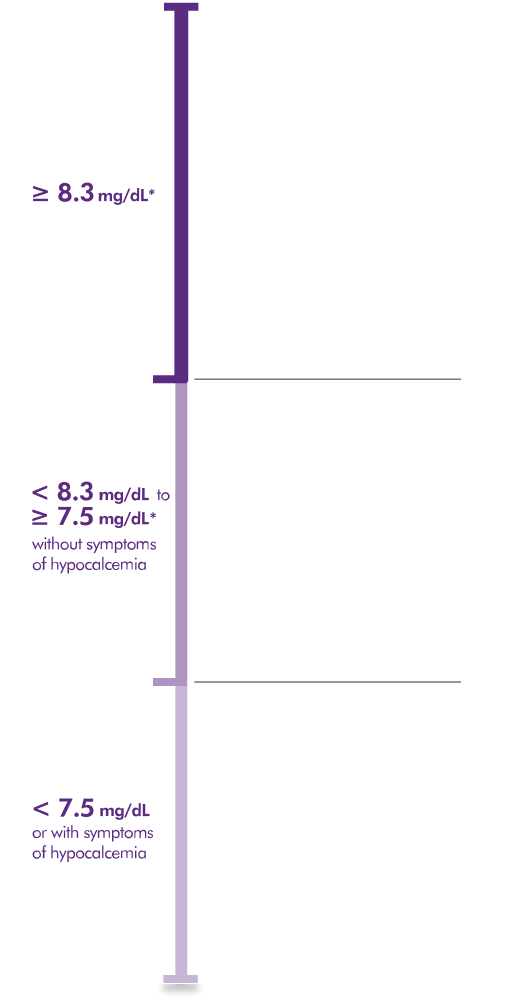
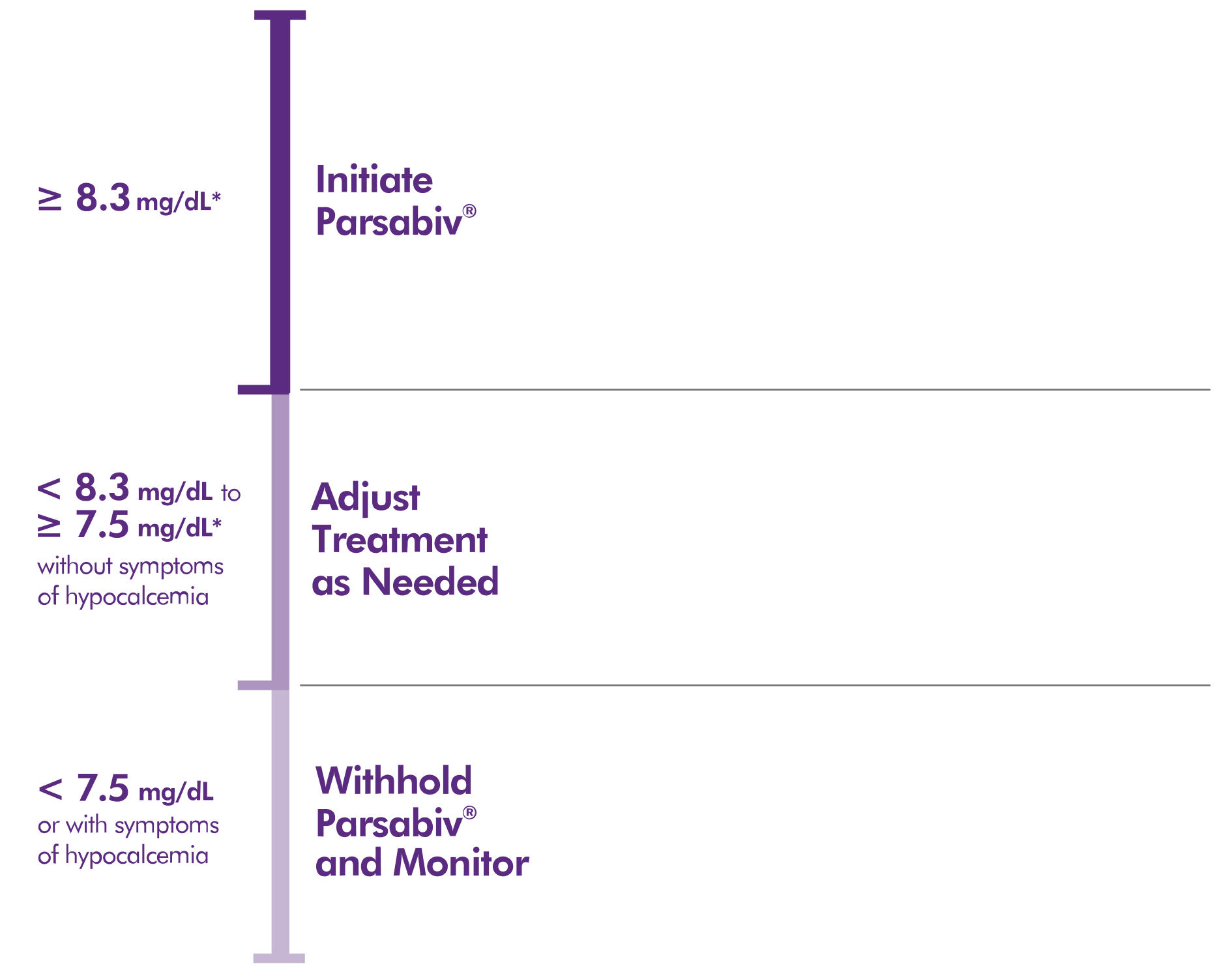
Initiate
Parsabiv®

  • DO NOT initiate Parsabiv® if corrected serum calcium is less than the lower limit of normal*
  • Monitor corrected serum calcium within 1 week after initiation or dose adjustment and every 4 weeks during treatment with Parsabiv® Educate patients on the symptoms of hypocalcemia and advise them to contact a healthcare provider if they occur

Adjust
Treatment
as Needed

  • Consider decreasing or temporarily discontinuing Parsabiv® or use concomitant therapies to increase corrected serum calcium (including calcium, calcium-containing phosphate binders, and/or vitamin D sterols or increases in dialysate calcium concentration)

Withhold
Parsabiv®
and Monitor

  • Stop Parsabiv® and treat hypocalcemia 
  • Start or increase calcium supplementation (including calcium, calcium-containing phosphate binders, and/or vitamin D sterols or increases in dialysate calcium concentration)
  • Throughout the studies, dialysate calcium concentration could be adjusted but had to remain ≥ 2.25 mEq/L1
  • Significant lowering of serum calcium can cause paresthesias, myalgias, muscle spasms, seizures, QT interval prolongation, and ventricular arrhythmias1

*Lower limit of reference range in phase 3 trials was 8.3 mg/dL.1,2

When cCa returns ≥ 8.3 mg/dL*

Reinitiate Parsabiv® (etelcalcetide)

When corrected serum calcium levels are within normal limits,
symptoms of hypocalcemia have resolved,
and predisposing factors for hypocalcemia have been addressed, reinitiate Parsabiv® (etelcalcetide) at a dose 5 mg lower than the last administered dose. If patient’s last administered dose of Parsabiv® was 2.5 mg or 5 mg, reinitiate at a dose of 2.5 mg.

Calcium reductions by baseline corrected calcium level

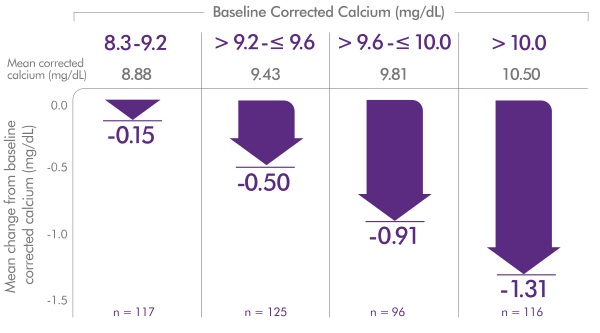
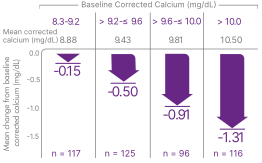
In combined placebo-controlled studies, calcium reductions with Parsabiv® (etelcalcetide) during the EAP were lowest among patients initiated at the lowest baseline calcium (8.3-9.2 mg/dL)6

Chart depicting reductions in corrected calcium based on varying baseline correct calcium ranges

Regardless of baseline calcium, levels remained above the lower limit of normal6,*

Post-hoc analysis of pooled data from two phase 3, 26-week, randomized, double-blind, placebo-controlled studies comparing Parsabiv® with placebo in patients with CKD on hemodialysis with iPTH > 400 pg/mL and corrected calcium ≥ 8.3 mg/dL; N = 1023. Patients in both treatment arms could be treated with vitamin D sterols and/or phosphate binders. Mean baseline iPTH in the Parsabiv® group and placebo group were 847 pg/mL and 836 pg/mL, respectively. The primary endpoint of each study was the proportion of patients who achieved a > 30% reduction from baseline in mean iPTH during the EAP (defined as weeks 20 through 27, inclusive).1,2,7

Data are presented by baseline corrected calcium quartile for Parsabiv®-treated patients only.6

*Lower limit of reference range in phase 3 trials was 8.3 mg/dL.1,2

Blood droplet graphic

Parsabiv® Dosing Pocket Guide

Helpful Parsabiv® (etelcalcetide) dosing information to keep by your side

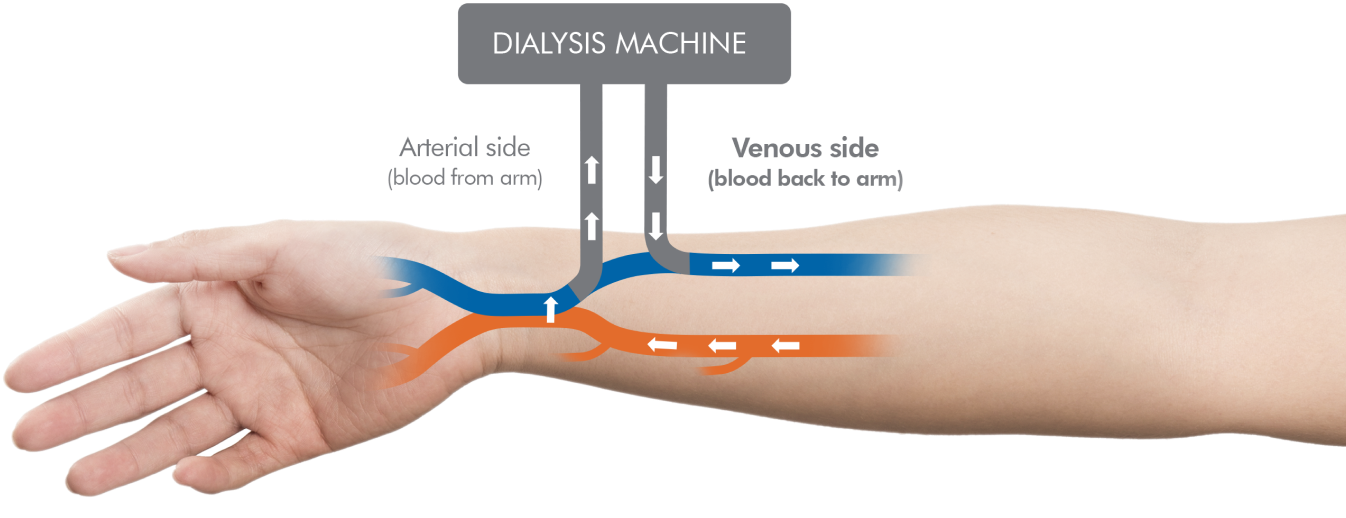
How to administer Parsabiv®1

HOW

By intravenous bolus injection

WHERE

Into the venous line of the dialysis circuit

WHEN

Only at the end of hemodialysis,
IV after rinse back or during rinse back

  • This is important to prevent the medication from being dialyzed
Diagram showing the interaction between patient and the dialysis machine

DO NOT:

  • Administer into the arterial line (the dose will be dialyzed out)

Helpful tips for Parsabiv® and hemodialysis

Flush with saline to make sure all medication reaches systemic circulation'

DO NOT pull the venous needle/catheter after rinse back. Alert the nurse that it's time to administer Parsabiv®.

If giving IV after rinse back, flush with at least 10 mL of saline

OR

If giving during rinse back, flush with at least 150 mL of saline

  • Without adequate saline flush, Parsabiv® (etelcalcetide) could remain within the dialysis tubing and therefore not reach the patient

Parsabiv® is removed by the dialyzer membrane and must be administered after blood is no longer circulating through the dialyzer.1

brand-cross-icons
brand-cross-icons

DO NOT mix or dilute Parsabiv® (etelcalcetide) prior to administration.1 The solution is clear and colorless. Inspect Parsabiv® for particulate matter and discoloration prior to administration. DO NOT use Parsabiv® vials if particulate matter or discoloration is observed.

Once Parsabiv® is withdrawn from the vial, administer immediately.

Not an actual Parsabiv® vial. The displayed vial is for illustrative purposes only.

How to store and handle Parsabiv®

keep-cold

Keep cold1

Parsabiv® is heat sensitive.

  • Keep Parsabiv® (etelcalcetide) (in the original, closed carton) in the refrigerator until ready to use it (2°C to 8°C, [36°F to 46°F])
  • DO NOT expose to temperatures above 25°C (77°F)
    • DO NOT place cartons, vials, or drawn syringes of Parsabiv® (etelcalcetide) on warm/hot surfaces, including dialysis machines
Protect Parsabiv® from light icon

Protect from light1

  • Leave in the carton and DO NOT remove the carton lid
  • Avoid exposure of vials and drawn syringes of Parsabiv® (etelcalcetide) to sunlight, direct light, and indirect light from natural or artificial sources, including light sources that may be inside the refrigerator
  • If exposed to light, the medication may not work as expected
use-promptly

Use promptly1

Once Parsabiv® is removed from the refrigerator:

  • Use within 7 days if stored in the original carton
  • Use within 4 hours and DO NOT expose to light if removed from original carton
    • DO NOT tape a syringe containing Parsabiv® (etelcalcetide) to a dialysis machine—this may expose the medication to light and heat
  • Use Parsabiv® immediately after properly withdrawing it into a syringe
Administration, Storage, & Handling for Nurses

Watch this video, geared specifically toward nurses, on how to store and administer Parsabiv®.

Administration, Storage, & Handling for Nurses

Watch this video, geared specifically toward nurses, on how to store and administer Parsabiv®.

brand-icons-1

Storage, Handling, & Administration Guide

A quick reference on how to use Parsabiv® (etelcalcetide)

Important Safety Information for Parsabiv®

Contraindication: Parsabiv® (etelcalcetide) is contraindicated in patients with known hypersensitivity to
etelcalcetide or any of its excipients. Hypersensitivity reactions, including face edema and anaphylactic reaction,
have occurred.

Hypocalcemia: Parsabiv® lowers serum calcium and can lead to hypocalcemia, sometimes severe. Significant
lowering of serum calcium can cause QT interval prolongation and ventricular arrhythmia. Patients with
conditions that predispose to QT interval prolongation and ventricular arrhythmia may be at increased risk for
QT interval prolongation and ventricular arrhythmias if they develop hypocalcemia due to Parsabiv®. Closely
monitor corrected serum calcium and QT interval in patients at risk on Parsabiv®.

Significant reductions in corrected serum calcium may lower the threshold for seizures. Patients with a history of
seizure disorder may be at increased risk for seizures if they develop hypocalcemia due to Parsabiv®. Monitor
corrected serum calcium in patients with seizure disorders on Parsabiv®.

Concurrent administration of Parsabiv® with another oral calcimimetic could result in severe, life-threatening
hypocalcemia. Patients switching from cinacalcet to Parsabiv® should discontinue cinacalcet for at least 7 days
prior to initiating Parsabiv®. Closely monitor corrected serum calcium in patients receiving Parsabiv® and
concomitant therapies known to lower serum calcium.

Measure corrected serum calcium prior to initiation of Parsabiv®. Do not initiate in patients if the corrected serum
calcium is less than the lower limit of normal. Monitor corrected serum calcium within 1 week after initiation or
dose adjustment and every 4 weeks during treatment with Parsabiv®. Measure PTH 4 weeks after initiation or
dose adjustment of Parsabiv®. Once the maintenance dose has been established, measure PTH per clinical
practice.

Worsening Heart Failure: In Parsabiv® clinical studies, cases of hypotension, congestive heart failure, and
decreased myocardial performance have been reported. Closely monitor patients treated with Parsabiv® for
worsening signs and symptoms of heart failure.

Upper Gastrointestinal Bleeding: In clinical studies, 2 patients treated with Parsabiv® in 1253 patient years of
exposure had upper gastrointestinal (GI) bleeding at the time of death. The exact cause of GI bleeding in these
patients is unknown and there were too few cases to determine whether these cases were related to Parsabiv®.

Patients with risk factors for upper GI bleeding, such as known gastritis, esophagitis, ulcers or severe vomiting,
may be at increased risk for GI bleeding with Parsabiv®. Monitor patients for worsening of common Parsabiv® GI
adverse reactions and for signs and symptoms of GI bleeding and ulcerations during Parsabiv® therapy.

Adynamic Bone: Adynamic bone may develop if PTH levels are chronically suppressed.

Adverse Reactions: In clinical trials of patients with secondary HPT comparing Parsabiv® to placebo, the most
common adverse reactions were blood calcium decreased (64% vs. 10%), muscle spasms (12% vs. 7%), diarrhea
(11% vs. 9%), nausea (11% vs. 6%), vomiting (9% vs. 5%), headache (8% vs. 6%), hypocalcemia (7% vs. 0.2%), and
paresthesia (6% vs. 1%).

Indication
Parsabiv® (etelcalcetide) is indicated for the treatment of secondary hyperparathyroidism (HPT) in adult patients
with chronic kidney disease (CKD) on hemodialysis.

Limitations of Use: Parsabiv® has not been studied in adult patients with parathyroid carcinoma, primary
hyperparathyroidism, or with CKD who are not on hemodialysis and is not recommended for use in these
populations.

Please see Parsabiv® (etelcalcetide) full Prescribing Information.

Important Safety Information for Parsabiv®

Contraindication: Parsabiv® (etelcalcetide) is contraindicated in patients with known hypersensitivity to
etelcalcetide or any of its excipients. Hypersensitivity reactions, including face edema and anaphylactic reaction,
have occurred.

Hypocalcemia: Parsabiv® lowers serum calcium and can lead to hypocalcemia, sometimes severe. Significant
lowering of serum calcium can cause QT interval prolongation and ventricular arrhythmia. Patients with
conditions that predispose to QT interval prolongation and ventricular arrhythmia may be at increased risk for...

References: 1. Parsabiv® (etelcalcetide) prescribing information, Amgen. 2. Block GA, Bushinsky DA, Cunningham J, et al. Effect of etelcalcetide vs placebo on serum parathyroid hormone in patients receiving hemodialysis with secondary hyperparathyroidism: two randomized clinical trials. JAMA. 2017;317:146-155. 3. Data on file, Amgen; [Change from Baseline in iPTH by Prior Cinacalcet Doses - Studies 20120229 and 20120230; 2018]. 4. Data on file, Amgen; [Clinical Study Report 20120229; 2014]. 5. Data on file, Amgen; [Clinical Study Report 20120230; 2014]. 6. Data on file, Amgen; [Calcium Change by Baseline Calcium; 2016]. 7. Data on file, Amgen; [Summary of Clinical Efficacy; 2015].